Bently Nevada has not withdrawn its commitment to the 3500: the rack platform remains fully supported even as Orbit 60 is recommended for new installations after 2020, and between 2016 and 2017 the company spent a “significant (multi million dollar)” sum to completely refresh the electronics, boards and layout of every 3500 module PCBA for RoHS compliance — replacing green boards with blue, lead-free ones. With more than eighty thousand systems deployed and roughly five thousand new racks a year when that statement was written, the spare-part question is no longer whether the platform will be supported, but which boards and modules a plant should hold, how to tell generations apart, and what to do when a slot fails at 2 a.m.
By TenBN Editorial · Published 28 October 2026 · 10-minute read

Quick answer: what is actually guaranteed?
- Status: the 3500 is fully supported. Bently Nevada states there is no forced obsolescence programme and no published end-of-support date.
- Age, not a term: the “24th birthday” in the 2020 post is the platform’s age at the time of writing, not a 24-year support window. By 2026 the design is roughly three decades old and still sold.
- The refresh: 2016–2017, multi-million-dollar investment, all 3500 module PCBAs redesigned for RoHS, green boards replaced by blue lead-free boards, built on new automated lines in Minden, Nevada.
- Upgrade rule: no compelling reason to move an installed rack unless you need functionality only a newer platform provides. Age alone is not a reason.
- Spares rule: stock by failure profile and criticality, match board revisions, and keep the compliance record with the serial number — not by rumour or by backlog headlines.
What “fully supported” covers — and what it does not
“Fully supported” is a lifecycle statement, not a stock guarantee. The distinction matters when you write a maintenance strategy or an asset-register note. The public statement supports the left column below; the right column is what it does not promise.
| Covered by the commitment | Not covered by the commitment |
|---|---|
| New spare modules and refreshed PCBAs continue to be built, not only repaired | A dated end-of-support commitment for every model variant |
| Repair and exchange of installed modules through the factory channel | Guaranteed lead times or off-the-shelf availability on any given day |
| Firmware documentation and libraries, plus continued rack configuration software | New features or expanded capability for the 3500 platform |
| Lifecycle management contracts with critical component suppliers | Free or automatic upgrades to Orbit 60 |
| Manufacture, test and assembly in Minden, Nevada | A commitment that every historic variant stays in production indefinitely |
The practical reading: the platform is alive, but a specific module can still be scarce for a quarter. That is why planning sits with the plant, not with the press release. The full wording and its limits are examined in our analysis of the 2016–2017 PCBA refresh.
Green boards, blue boards: five rules for a mixed storeroom
- Colour is a first filter, not a certificate. Green indicates the pre-refresh leaded generation, blue the RoHS lead-free generation. Lighting and phone cameras lie; the label revision and the material declaration are the evidence.
- The generations coexist in one rack. Refreshed and legacy boards share the same slots and connectors. A mixed rack is normal and is not a defect.
- Record revision per slot. Put the board colour, revision letter and date code against each rack position in your CMMS. When a channel later misbehaves, the fault history stays interpretable.
- Repair process follows the board, not the plant standard. Lead-free assemblies need higher reflow temperatures and different fluxes. Ask a repair house which process it will use before it touches a blue board, and do not let a leaded rework profile be applied to a lead-free assembly.
- Keep the compliance file with the serial. If your site operates under RoHS-style restrictions or a customer restricted-substances list, file the material statement and test record against the module serial, not against the purchase order.
Where a 3500 rack actually consumes parts
The table below reflects what moves through the independent aftermarket and what maintenance teams report in practice; Bently Nevada does not publish module-level failure rates, so treat the “drivers” column as field experience rather than an official statistic.
| Position | Role | What usually drives replacement | Stocking note |
|---|---|---|---|
| 3500/15 power supply | AC/DC conversion, redundant pairs | Ageing electrolytics, thermal stress, rail collapse under load | Highest-value single spare; match voltage and approval variant, one per rack family |
| 3500/42M vibration monitor | Radial and axial vibration, seismic inputs | Channel faults, integration or configuration errors, firmware mismatch | Most frequently replaced monitor; hold one or two per site |
| 3500/22M TDI | Transient data to System 1 | Network and firmware issues, data gaps, failed updates | Critical where System 1 trending is used; keep one per rack |
| 3500/32 relay module | Trip and alarm outputs | Contact wear, driver faults, chattering outputs | Safety path; do not run without a tested spare |
| 3500/92 gateway | Modbus or OPC to the DCS | Comms loss, protocol configuration, network changes | One per network segment, not one per site |
| 3500/20 RIM | Rack interface and configuration | Configuration port damage, firmware faults | One per site is usually sufficient |
| 3500/25 Keyphasor | Once-per-turn speed and phase | Input damage, missing trigger, probe faults | Low cost against downtime; keep two |
| 3500/50 tachometer | Speed and zero-speed | Input faults, overspeed channel errors | One shared across similar machines |
| 3500/60 RTD monitor | Bearing and winding temperature | Channel drift, open RTD, wiring faults | One each of RTD and TC variants |
| 3500/61 TC monitor | Thermocouple temperature | Cold-junction errors, open circuit | Match the thermocouple type in use |
| 3500/05 system rack | Chassis and backplane | Connector wear, physical damage, expansion | Replace with the rack; standardise on one size |
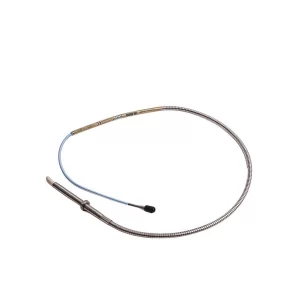
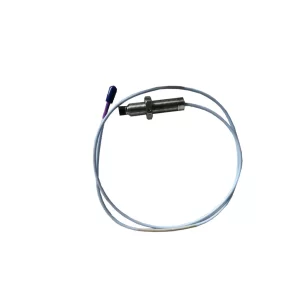
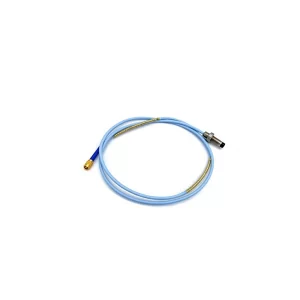
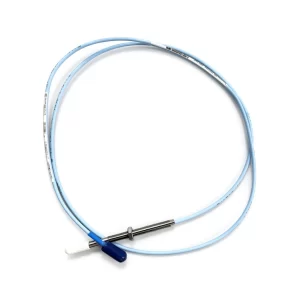
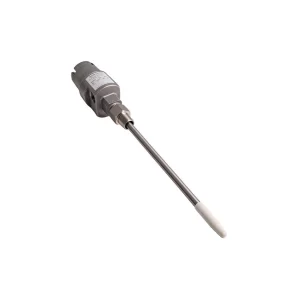
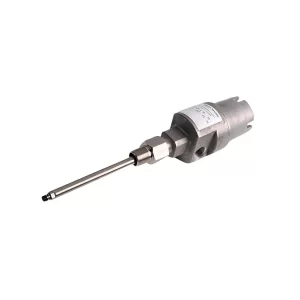
On the sensor side the same logic applies to consumables that fail through handling rather than electronics: the 3300 XL 8 mm probe, the 3300 XL extension cable and the 3300 XL proximitor. A common planning figure is 10–20% of installed channels held as sensor spares, weighted towards the machines you cannot run without.
A three-tier kit sized by criticality
Uniform sparing across a site is expensive and still leaves the wrong parts on the shelf. Tiering by consequence of failure is cheaper and faster.
| Tier | Typical asset | Recommended holding | Target restoration |
|---|---|---|---|
| A — no redundancy | Single critical train: main compressor, feed-gas turbine, large motor | Mirror every slot in the rack, plus a full probe/cable/proximitor set per train, one 3500/15, one 3500/22M and one 3500/92 | Under 4 hours, swap and reconfigure |
| B — redundant or spared | Paired machines, installed spare, short repair window | One each of the four highest-movement modules per rack family: 3500/15, 3500/42M, 3500/32, 3500/22M | Same shift, shared across units of the same revision |
| C — balance of plant | Cooling water, auxiliary fans, non-production drives | Repair-first policy, one shared site kit: power supply, vibration monitor, probe set | Next planned outage |
These quantities are planning defaults, not Bently Nevada recommendations. Adjust for redundancy, spares already on the shelf, and the lead time you can actually tolerate during an outage.
New surplus, refurbished, or repair your own board?
| Option | Best when | Ask for | Watch out for |
|---|---|---|---|
| Factory channel or new surplus | Protection-critical slot, long remaining life, audit trail required | Revision, date code, test record, material statement, warranty | Lead time and price; confirm the exact model string |
| Refurbished or exchange | Fast restoration of a non-critical or already-spared slot | Serial number, board photographs, test record, warranty terms | Unknown rework history and mismatched revisions |
| Repair your own board | Known failure, revision and compliance history must be preserved | Component-level report, lead-free process statement, post-repair test | Turnaround time; ask for the original board back |
| Untested pulls | Never in a protection path | — | No traceability, no test data, no comeback |
Storage, records and long shelf life
- Keep boards in ESD bags with desiccant at 30–60% relative humidity and a stable temperature; avoid plant roofs and unventilated cabinets.
- Label every spare with revision, date code and source, then link it to the rack position it is intended to replace.
- Photograph both board faces before shelving. It settles the green-versus-blue question years later without opening the bag.
- For a board that has sat for years, ask the repair house for a power-on check rather than assuming shelf life equals service life.
- Keep firmware and rack configuration software versions in the same record; a perfect module with the wrong firmware is still a delay.
When a migration is actually justified
Bently Nevada’s own test is functional: move when you need something the 3500 cannot do, not because a newer platform exists. In practice that means channel growth in one location, distributed chassis or field cabinets, an OT segmentation requirement that hardware-level isolation would satisfy, a new-build standard, or a rack that has simply run out of slots. Age, a working protection function and an untraceable end-of-life rumour are not triggers.
There is also a middle path that is often the best value: keep protection on the 3500 and add analytics above it. The 3500/22M TDI already streams transient data to System 1, so a hybrid architecture can add condition monitoring without re-certifying a protection system that works. The lifecycle position behind that decision is set out in our 2026 support-status review.
Four actions this quarter
- Export the rack bill of materials with revisions. Every slot, every board colour, every firmware level. Most sites discover two or three undocumented variants in the first pass.
- Tag and photograph the spares you already own. Then reconcile them against Tier A requirements before buying anything new.
- Fix one migration decision rule in writing. For example: no move unless channel count, topology or OT isolation requires it; review annually.
- Book a lifecycle review for your specific model mix. Ask Bently Nevada for a written statement covering the variants you actually run; a public blog post is a position, not an asset-register entry.
Rack layout and module roles are described in the 3500 system guide, and the seismic and proximity configuration detail sits on the 3500/42M system page. Application notes cover gas turbines, oil and gas compressors and paper machines.
Need a 3500 module, a refreshed board or a 3300 XL sensor? TenBN stocks Bently Nevada protection-system modules and probes. Send the full model string, a tag number or a photo of the label and we will identify the revision, confirm availability, and tell you honestly when the factory channel is the better route.
A related commercial change landed while this piece was being written: the Bently Nevada monitoring page now headlines “Cordant™ Devices”, a portfolio label that groups the 3500 rack with Orbit 60, the sensing chain and the condition-monitoring devices. It renames nothing, but it does reframe how the next renewal conversation is likely to be structured. Our breakdown is here: Cordant™ Devices: what the homepage change means for spares buyers.
Frequently asked questions
Is the Bently Nevada 3500 obsolete?
No. Bently Nevada describes the line as fully supported, states that it has not instituted a forced obsolescence programme, and still manufactures, tests and assembles the product in Minden, Nevada. Orbit 60 is recommended for new installations after 2020, but that is a recommendation for new builds, not an end-of-life notice for installed racks.
Does the “24th birthday” mean 24 years of support?
No. It is the age of the platform at the time the post was written in 2020, which puts commercial introduction around 1996 — roughly three decades ago today. The post publishes no end-of-support date. If you need a dated commitment for an asset register, request a written lifecycle statement for your model mix.
What changed in the 2016–2017 PCBA refresh?
The electronics, boards and layout of all PCBA 3500 modules were refreshed to meet RoHS standards, and green boards were replaced with blue lead-free boards. Manufacturing moved onto new automated lines in Minden with nearly 100% part-placement automation, 3D X-ray inspection and laser profiling of solder deposits, supported by more than $10 million of recent investment.
Can green and blue boards be mixed in one rack?
Yes. Both generations occupy the same slots and connectors, and mixed racks are common in sites that stocked spares before 2017. Record which revision sits in which position so fault history stays readable, and treat colour as a first filter rather than proof of compliance.
How many 3500 spares should a plant hold?
There is no single number: it depends on redundancy, consequence of failure and the lead time you can tolerate. A practical starting point is to mirror every slot on a single critical train, hold one each of the four highest-movement modules per rack family on redundant machines, and run a repair-first policy with one shared kit for balance-of-plant equipment.
Related reading
- Bently Nevada 3500 long-term support: inside the 2016–2017 PCBA refresh
- 3500 support status 2026: long-term support confirmed as Orbit 60 scales
- Natref refinery lifts reciprocating compressor reliability with 3500 and System 1
- 3500/42-01-02 Proximitor Seismic Monitor added to TenBN inventory
- Baker Hughes Q3 2026: record IET backlog and what it means for Bently Nevada
Sources and verification
Primary source: Bently Nevada, “Our commitment to the 3500 monitoring system”, Baker Hughes blog, by Tarannum Sarang, published April 2020 and last revised 27 September 2024, checked on 28 October 2026. Supporting sources: the Bently Nevada 3500 Machinery Protection Systems product page for installed-base and SIL 2 configuration statements. Quotations and figures are reproduced as published; the module failure profile and the three-tier kit are TenBN editorial guidance, not Bently Nevada recommendations. The 24-year reference is the platform’s age at the time of writing, not a support term.
TenBN is an independent supplier of Bently Nevada spare parts and is not affiliated with, endorsed by or authorised by Baker Hughes or Bently Nevada. Product names and numbers are used for identification only. Support entitlements, warranty and lifecycle commitments are defined solely by Baker Hughes.