In a customer success story updated on 20 October 2026, Bently Nevada detailed how Natref — the National Petroleum Refiners of South Africa refinery at Sasolburg — has strengthened the reliability of its reciprocating compressor fleet using Bently Nevada 3500 machinery protection systems engineered in accordance with API 670, combined with the System 1 v19.1 condition monitoring platform. The refinery followed a phased path from basic machinery protection to advanced predictive monitoring — and, unusually, its own reliability team executed the full engineering, installation and sensor retrofit scope with support from Bently Nevada’s Design & Installation Services (D&IS) and Retrofit teams.

Quick answer: what did Natref do to improve reciprocating compressor reliability?
Natref built its reciprocating compressor monitoring program around the Bently Nevada 3500 series — a machinery protection platform designed to the requirements of the API 670 standard — and streams that data into System 1 v19.1 for trending, diagnostics and predictive maintenance. Rather than a single large project, the refinery upgraded in phases: protection first, then a sensor retrofit, then advanced condition monitoring on top of the installed base. The engineering, installation and sensor changes were performed by Natref’s own reliability team, supported by Bently Nevada D&IS and Retrofit specialists, with sensor calibration executed by a Bently Nevada RECIP-certified engineer and quality-assured by a regional technical lead.
Case snapshot
| Element | Detail |
|---|---|
| Site | Natref (National Petroleum Refiners of South Africa (Pty) Ltd), Sasolburg, Free State, South Africa |
| Industry | Crude oil refining — fuels and petrochemical feedstocks for the South African inland market |
| Assets protected | Reciprocating compressor fleet (refinery gas / hydrogen service machines of the API 618 type) |
| Machinery protection | Bently Nevada 3500 series, in accordance with API 670 |
| Condition monitoring platform | System 1 v19.1 |
| Approach | Phased upgrade: basic protection → sensor retrofit → advanced predictive monitoring |
| Execution | Natref reliability team self-performed engineering, installation and sensor retrofit, supported by Bently Nevada D&IS / Retrofit |
| Calibration & QA | Sensor calibration by a Bently Nevada RECIP-certified engineer; QA review by a regional technical lead |
| Source | Bently Nevada customer success story, updated 20 October 2026 |
Who is Natref?
Natref — National Petroleum Refiners of South Africa — is one of the country’s strategic fuel producers. The Sasolburg refinery has a nameplate capacity of about 108,500 barrels of crude per day and supplies the inland market around Gauteng/Johannesburg, receiving crude by pipeline from the port of Durban. The plant has long operated as a joint venture in which Sasol holds the majority stake (63.64%); in December 2023 TotalEnergies Marketing South Africa agreed to divest its 36.36% minority stake to the Prax Group. For an operator of this profile, an unplanned compressor shutdown is not just a maintenance event — it is a production-loss and supply-continuity problem. That is the backdrop against which the reciprocating compressor monitoring program was built.
Why reciprocating compressors are the hardest monitoring case in a refinery
Reciprocating compressors dominate refinery hydrogen and recycle service because they deliver high discharge pressure in a compact machine. They are also notoriously hostile to instrumentation: reversing loads, high vibration energy transmitted through frames and crossheads, pulsating gas columns, and thermal cycling in valve and rod-pack regions. Failure modes — from rod drop and crosshead wear to valve deterioration and foundation looseness — rarely announce themselves with a single clean alarm.
That is why the industry specifies these machines to both API 618 (the compressor itself) and API 670 (the machinery protection system). A compliant protection system must do more than trip the machine: it must preserve enough raw data — bearing and frame vibration, shaft position, keyphasor timing, temperatures — for engineers to diagnose why a machine degraded, not just that it tripped. This is precisely the design intent of the Bently Nevada 3500 architecture.
The phased upgrade path: protection first, prediction next
The Natref case is a textbook example of the upgrade route Bently Nevada recommends for reciprocating compressor fleets: start with reliable protection, then progressively widen the data net until predictive analytics become possible.
Phase 1 — API 670 machinery protection
The foundation is the 3500 rack: 3500/15 power supplies, a 3500/20 rack interface, monitoring modules sized to the machine, and relay logic for trip functions. For recip machines the relevant monitors include the 3500/40M and 3500/42M for proximity and seismic (case) vibration, the 3500/25 keyphasor for phase reference and speed, and the 3500/60 for RTD temperature inputs such as cylinder and discharge temperatures. Bently Nevada also offers dedicated recip monitoring — the 3500/72M reciprocating machinery monitor — for fleets that need crank-angle-based diagnostics.
Phase 2 — sensor retrofit
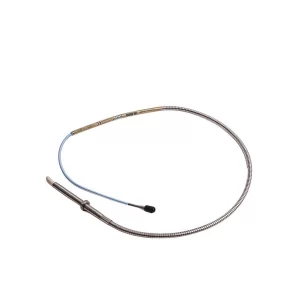
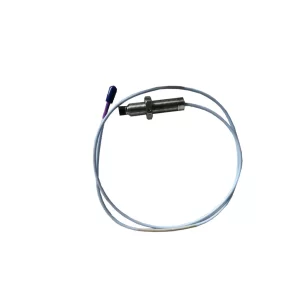
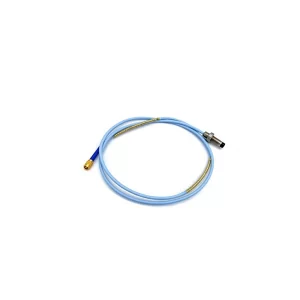
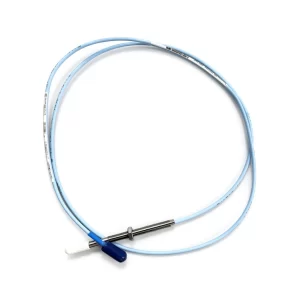
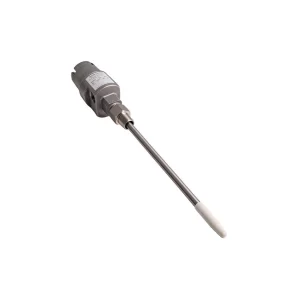
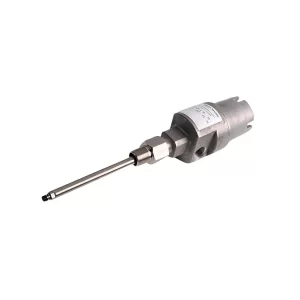
Upgrading what the machine “feels” is where most of the field work sits: replacing or adding 3300 XL 8 mm proximity probes with matched 330180 Proximitor sensors and extension cables on shaft positions, and mounting 330500 Velomitor or 330400 accelerometer transducers on bearing housings and crossheads. Every changed sensor system needs correct clearance, calibration and documentation — the step at which Natref engaged a Bently Nevada RECIP-certified engineer while its own team performed the physical work.
Phase 3 — System 1 v19.1 condition monitoring
With protection and sensors in place, the 3500/22M transient data interface and 3500/92 communication gateway move real-time and historical data off the rack and into System 1 v19.1. That is where the program turns predictive: operator displays, alarm/event history, orbital and spectral diagnostics, and fleet-wide trending. For recip fleets, System 1’s crank-angle-based analysis — cylinder pressure work via the 3500/77M pressure monitor where adopted — adds thermodynamic and rod-load insight that protection alone cannot provide. System 1 has been Bently Nevada’s flagship asset health platform for more than two decades, with 10,000+ active users worldwide.
Self-execution with vendor support: the Natref model
What makes this case study distinctive is not only the technology stack but the delivery model. Natref’s reliability team performed all engineering, installation and sensor retrofit work in-house, with Bently Nevada’s D&IS and Retrofit teams in a support role. Independent execution is feasible here for a specific reason: the 3500 platform is designed so that plants with competent staff can grow the system in place — module additions, configuration changes and System 1 integration do not require ripping out protection hardware. The quality gates stayed with the vendor where they matter most: sensor calibration was executed by a Bently Nevada RECIP-certified engineer for recip machinery, and a regional technical lead performed the QA review.
For other refiners, the Natref pattern offers a practical checklist:
- Specify protection to API 670 from day one, even if condition monitoring comes later.
- Phase the investment: protection → sensors → analytics, each phase building on the installed base.
- Use the vendor for certification-grade work (calibration, QA) and self-perform installation where your team’s competence allows.
- Keep the door open to recip-specific upgrades — rod drop, cylinder pressure, crank-angle diagnostics — by choosing a scalable platform.
Frequently asked questions
What machinery protection system does Natref use on its reciprocating compressors?
The Bently Nevada 3500 series, engineered in accordance with the API 670 standard for petroleum and chemical industry machinery protection systems.
Which condition monitoring software does the Natref installation run?
System 1 v19.1, Bently Nevada’s plant-wide condition monitoring and diagnostics platform, fed from the 3500 racks via the transient data interface and communication gateway.
Who performed the engineering and installation at Natref?
Natref’s own reliability team self-performed the full engineering, installation and sensor retrofit scope, supported by Bently Nevada’s Design & Installation Services (D&IS) and Retrofit teams.
Who calibrated the sensors?
A Bently Nevada RECIP-certified engineer performed the sensor calibration, and the work was quality-assured through a review by a Bently Nevada regional technical lead.
Why are reciprocating compressors monitored differently from centrifugal machines?
Recip machines fail through mechanically distinct mechanisms — rod drop, crosshead and slider wear, valve deterioration, pulsation-induced fatigue — driven by reversing loads and crank angle. Monitoring therefore leans on case vibration, keyphasor-synchronised crank-angle analysis, and (in advanced implementations) cylinder pressure, rather than shaft-orbit analysis alone.
Can an existing 3500 system be upgraded to System 1 without replacing protection hardware?
Yes — that phased route is exactly what the Natref case demonstrates: protection racks stay in service while the transient data interface, sensor upgrades and System 1 licenses extend the installed base into predictive monitoring. The 3500 platform’s long-term support status is documented in our 3500 support status article.
Genuine 3500 modules and sensors from stock at TenBN
TenBN (bentlysupply.com) stocks original Bently Nevada hardware for exactly this kind of phased project: 3500 monitoring modules (3500/42M, 3500/40M, 3500/25, 3500/22M, 3500/92), 3300 XL proximity probe systems, extension cables, and seismic transducers — new and surplus-original, with fast global delivery for refinery turnaround windows. Explore the compressor applications hub and the petrochemical protection guide, or send us a part list for a quote.
Related reading
- Bently Nevada 3500 Machinery Protection System: Complete Guide
- Bently Nevada System 1 at 20 Years: 10,000+ Active Users Worldwide
- Bently Nevada 3500 Support Status 2026: Long-Term Support Confirmed
- Bently Nevada’s AI Machine Health Service for Balance-of-Plant Assets
Sources: Bently Nevada (Baker Hughes) customer success story on Natref reciprocating compressor monitoring, updated 20 October 2026; TotalEnergies press release on the divestment of its Natref minority stake (December 2023); U.S. EIA “South Africa energy overview”; Sasol company disclosures on Natref ownership and operations. Technology references: API 670 / API 618 standards, Bently Nevada 3500 and System 1 product documentation.