Bently Nevada has not changed its position on the 3500: the platform is still fully supported, and there is no forced obsolescence programme. What makes that claim more than a marketing line is an engineering detail buried in the same statement — between 2016 and 2017 the company spent a “significant (multi million dollar)” sum to completely refresh the electronics, boards and layout of every 3500 module PCBA so the product could meet RoHS standards, replacing the long-familiar green boards with blue, lead-free ones.

Quick answer
- Status: the 3500 remains fully supported. Orbit 60 is recommended for new installations after 2020 “wherever suited”, but the 3500 has not been put on an end-of-life path.
- The refresh: 2016–2017, multi-million-dollar investment, every 3500 module PCBA redesigned for RoHS compliance; green boards replaced by blue lead-free boards.
- Manufacturing: built in Minden, Nevada, on three new PCBA lines with close to 100% automated part placement, 3D X-ray inspection and laser profiling of solder deposits.
- Installed base: more than 80,000 systems in 2020 and about 5,000 new racks a year at that point; the current product page cites over 85,000 installed worldwide.
- Upgrade rule: no compelling reason to move an installed rack unless you need functionality that only a newer platform such as Orbit 60 provides.
What the post actually says — and what it does not
“Our commitment to the 3500 monitoring system” is attributed to Tarannum Sarang, Senior Product Manager. The byline is 24 April 2020; the page metadata shows a last revision of 27 September 2024. It is still the most explicit lifecycle statement Bently Nevada publishes on the 3500, which is why it keeps resurfacing in customer conversations.
“The 3500-product line remains fully supported, even as it passes its 24th birthday.” … “there is no compelling reason to upgrade these systems immediately unless the functionality of one of our newer monitoring systems, such as Orbit 60, is required (or desired).”
Two clarifications matter if you are quoting this post internally. First, 24 years is an age, not a support window: the sentence marks a birthday in 2020, which puts the platform’s commercial introduction around 1996. By 2026 the 3500 is roughly three decades old and still shipping new racks — the product page states “over 85,000 installed worldwide” and describes the system as available in a SIL 2-rated configuration. Second, the post contains no end-of-life date and no stated end of support. “Fully supported” is the operative phrase; a commitment with an expiry date would be a different document.
The commercial logic is spelled out too: “we have a strong commitment to support our customers rather than institute a forced obsolescence program.” For a plant running a rack installed in the late 1990s that still trips correctly, that is the sentence that matters.
The 2016–2017 PCBA refresh, in engineering terms
The exact wording is worth keeping: Bently Nevada “made a significant (multi million dollar) Investment in 2016 & 2017 to completely refresh all the electronics, boards, and layout on the PCBA 3500 modules to meet RoHS standards. The green boards have now been replaced with the blue boards for a lead-free product line.”
Read as an engineering programme rather than a slogan, that sentence describes four changes:
- Material compliance. RoHS restricts lead and other substances in electrical equipment. A lead-free PCBA is not just a different solder alloy: it forces re-qualification of solder joints, reflow profiles, component finishes and long-term reliability data.
- Board layout. “Layout” is named explicitly, so this was not a colour change on an unchanged design. Layout revisions usually travel with component substitutions driven by obsolescence.
- Manufacturing. The same post describes over $10 million of recent investment in Minden, Nevada, including PCBA prototyping and three new PCBA lines with “nearly 100% automation of part placements”, 3D X-ray inspection and laser profiling of solder deposits.
- Obsolescence management. The company says it has “solidified critical component’s lifecycle management contracts with suppliers”, completed firmware documentation and libraries, and was refreshing the 3500 rack configuration software.
That last point is the one maintenance managers should note. A thirty-year-old platform stays buyable only if someone is actively managing the parts inside it. Board refresh, supplier lifecycle contracts and firmware libraries are what “fully supported” looks like in practice.
Green board or blue board: what changed on the PCBA
| Element | Legacy board (green) | Refreshed board (blue) | Why it matters to an owner |
|---|---|---|---|
| Process | Pre-RoHS, leaded process as described by Bently Nevada | Lead-free, RoHS-compliant | Material declarations for regulated sites and customer audits |
| Colour | Green | Blue | Fastest visual first filter in the field or in a photo |
| Layout | Original design | Refreshed electronics, boards and layout | Continued manufacturability when parts become obsolete |
| Build | Earlier lines | Minden lines, near-100% automated placement, 3D X-ray | Consistency of solder joints across production lots |
| Documentation | Older revision records | Firmware documentation and libraries completed | Repair, configuration and traceability continuity |
One caution: colour is an indicator, not a certificate. Two boards can look blue in a phone photo taken under different light. For compliance purposes, ask for the revision on the label, the material statement and the test record for that serial number.
Why the refresh matters if you own a 3500 rack
Four practical consequences follow from a board-level refresh rather than a marketing announcement:
- New spares continue to be built, not only repaired. A refresh programme that touches all module PCBAs is an investment in future production. It is the opposite of the behaviour you would expect from a platform being wound down.
- Compliance paperwork exists for the current generation. If your plant operates under RoHS-style restrictions or a customer’s restricted-substances list, the blue board is the version whose declaration you want on file.
- Mixed inventories are normal. Sites that stocked spares before 2017 can hold both generations. They fit the same slots, but record which revision sits in which position so a later fault history stays interpretable.
- Obsolescence is managed per module, not per platform. When a specific module becomes hard to source, that is a procurement problem for that module — it is not evidence that the 3500 is ending.
3500 or Orbit 60: the official decision rule
Bently Nevada’s rule is narrower than much of the market commentary around it. Orbit 60 is the recommendation for new installations after 2020 “wherever suited”. For an existing rack the test is functional: move when you need something the 3500 cannot do, not because a newer platform exists.
| Dimension | 3500 | Orbit 60 |
|---|---|---|
| Position | Fully supported incumbent | Recommended for new installations after 2020 |
| Form factor | Rack-based, field-proven architecture | 3U and 6U chassis; the 6U holds more channels in the same cutout as a 3500 |
| Capacity | Function-per-module, typically four channels per monitor | Up to 80 dynamic channels per SIM |
| Topology | Central rack | Distributable chassis via Bridge modules, linear or star topology |
| Cybersecurity | Plant integration through gateway modules such as the 3500/92 | Data-diode isolation between condition monitoring and protection |
| Certification | SIL 2-rated system configuration | API 670 protection, SIL certified |
| Migration | Retrofit path documented by Bently Nevada | 3500 retrofit guidance published |
Reasons that justify a move: channel growth in one location, long cable runs or field cabinets, an OT segmentation requirement that hardware-level isolation would satisfy, standardisation on a new build, or exhausted rack space. Reasons that do not: the age of the rack on its own, a working protection function, or a generic end-of-life rumour that cannot be traced to a Bently Nevada document.
Buying a 3500 module in 2026: a six-point check
Because both board generations are in circulation, a part number alone does not tell you what will arrive. Ask for six things before the PO:
- The full model string with revision, not just “3500/42M”.
- Photos of the actual unit: label, connector side and both board faces. Board colour is the fastest first filter.
- Firmware and rack configuration-software compatibility for your installation.
- A test record: what was powered, for how long, against which limits.
- A RoHS or material statement if your site needs one for compliance.
- The serial number, so the module can be traced to its rack position in your records.
The 3500 positions that move most often through the independent channel are the rack and power side, the rack interface and transient-data modules, monitoring and relay modules, and the communication gateway: 3500/05 system rack, 3500/15 power supply, 3500/20 rack interface module, 3500/22M TDI, 3500/25 Keyphasor module, 3500/32 relay module, 3500/42M vibration monitor, 3500/50 tachometer, 3500/60 RTD monitor, 3500/61 thermocouple monitor and 3500/92 communication gateway.
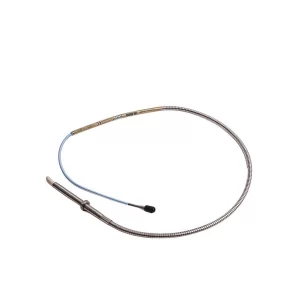
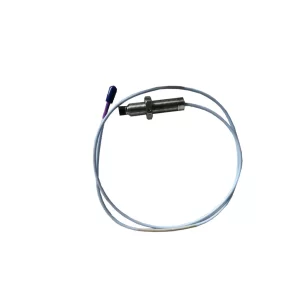
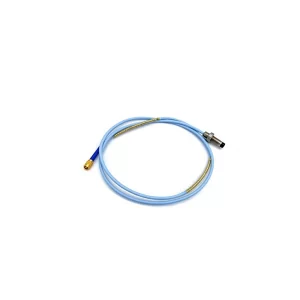
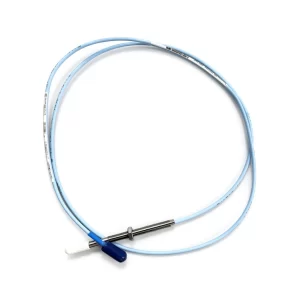
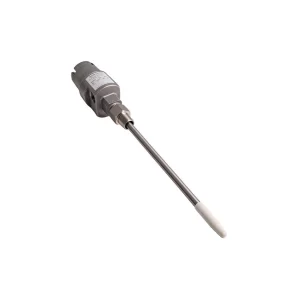
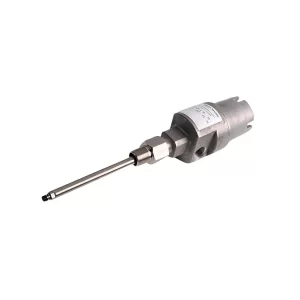
On the sensor side the same long-life logic applies to the 3300 XL 8 mm probe, the 3300 XL extension cable and the 3300 XL proximitor. System context, module roles and rack layout are described in the 3500 system guide and on the 3500/42M system page; application notes cover gas turbines, oil and gas compressors and steam turbines.
A parts specialist is usually faster than the factory for identifying a revision, confirming stock and shipping a module that is already in the channel. Configuration, firmware, warranty and critical diagnostics remain factory matters. It is worth keeping the two conversations separate instead of asking one team to do both.
Need a 3500 module or a 3300 XL sensor? TenBN stocks Bently Nevada protection-system modules and probes. Send the full model string, a tag number or a photo of the label and we will identify the revision, confirm availability and tell you honestly when the factory channel is the better route.
FAQ
Is the Bently Nevada 3500 obsolete?
No. Bently Nevada describes the line as fully supported and states that it has not instituted a forced obsolescence programme. New racks were still being installed at roughly 5,000 a year when the statement was written, and the current product page cites more than 85,000 systems installed worldwide.
Does “24th birthday” mean a 24-year support life?
No — it is the platform’s age at the time of writing in 2020, not a fixed support term. The post publishes no end-of-support date. If you need a dated commitment for an asset register or a maintenance strategy, ask Bently Nevada for a written lifecycle statement covering your specific model mix.
What exactly changed in the 2016–2017 PCBA refresh?
The electronics, boards and layout of all PCBA 3500 modules were refreshed for RoHS compliance, and green boards were replaced by blue lead-free boards. Manufacturing moved onto new automated lines in Minden, Nevada, with 3D X-ray inspection and laser profiling of solder deposits.
How can I tell whether a spare has the refreshed board?
Blue instead of green is the visible first indicator, but colour alone is not a compliance record. Confirm the revision on the label, ask for a photo of the board, and request the material statement and test record for that serial number.
Do I have to migrate to Orbit 60 now?
Only if you need functionality the 3500 does not provide — higher channel density in the same footprint, distributed chassis, or hardware-level network isolation. Bently Nevada’s own wording is that there is no compelling reason to upgrade immediately unless the newer functionality is required or desired.
Related reading
- Bently Nevada 3500 support status 2026: long-term support confirmed as Orbit 60 scales
- Bently Nevada customer support contacts and M&S tiers
- Natref refinery lifts reciprocating compressor reliability with 3500 and System 1
- Baker Hughes Q3 2026 earnings preview: IET momentum and what it means for Bently Nevada
- Bently Nevada System 1 at 20 years: 10,000+ active users worldwide
Sources and verification
Primary source: “Our commitment to the 3500 monitoring system”, Bently Nevada blog, published 24 April 2020 and last revised 27 September 2024, checked on 27 October 2026. Supporting sources: the Bently Nevada 3500 Machinery Protection Systems and Orbit 60 Series product pages, and the 2019 Orbit 60 launch announcement. Figures and quotations are reproduced as published; the 24-year reference is an age at the time of writing, not a support term.
TenBN is an independent supplier of Bently Nevada spare parts and is not affiliated with, endorsed by or authorised by Baker Hughes or Bently Nevada. Product names and numbers are used for identification only. Support entitlements, warranty and lifecycle commitments are defined solely by Baker Hughes.