
The Bently Nevada 2300 Series is a compact vibration monitor for continuous protection of medium-to-low criticality and spared machinery. Each unit takes two seismic or proximity channels plus one dedicated speed channel, converts them into acceleration, velocity, displacement and speed values, and drives relay alarms. The 2300/20 version adds configurable 4-20 mA outputs for a DCS.
What Does the 2300 Series Vibration Monitor Measure?
It measures the quantities plant teams already use for machine protection, without a separate signal conditioner between sensor and alarm logic.
- Acceleration, peak and rms, from ICP accelerometers
- Velocity, peak and rms, from Velomitor sensors
- Displacement, peak-to-peak and rms, from Proximitor probes
- Speed from a channel accepting a proximity probe, magnetic pickup or proximity switch
Two inputs run with synchronized sampling and independent 24-bit converters, and each channel has a configurable bandpass filter spanning 0.2 Hz to 20 kHz. One platform therefore covers slow rotating equipment and faster motors or fans, provided sensor and filter settings match the machine.
Envelop acceleration demodulation is supported for rolling-element bearing and gear diagnostics. It responds to repetitive impacts from a developing defect, not only overall casing energy, so bearing condition becomes visible before overall vibration rises.
Which Machinery Fits a DIN-Rail Vibration Monitor?
Plants use this class where a rack would be over-specified but a portable route is too slow: spared pumps, fans, blowers, compressors and balance-of-plant drives that still need continuous coverage. Sites weighing permanent coverage against route-based checks can compare this approach with cooling tower fan monitoring practice. Baker Hughes lists oil and gas, power generation, water treatment, pulp and paper, manufacturing, mining and cement.
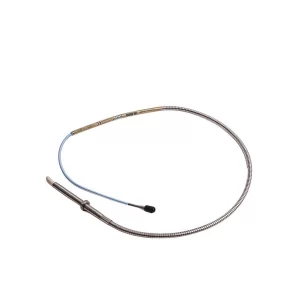
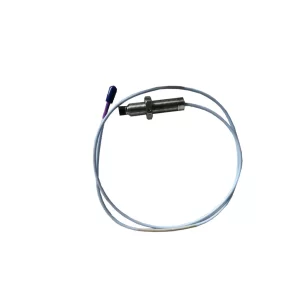
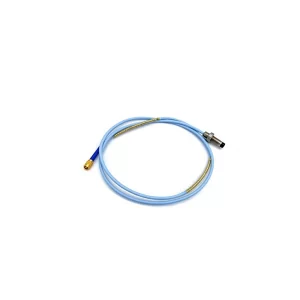
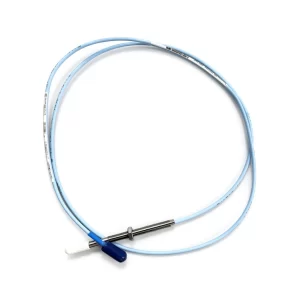
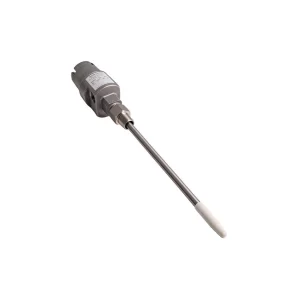
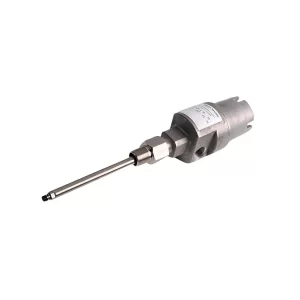
Sensor choice follows bearing type. Proximity probes suit fluid-film bearings, where shaft-relative motion is the protection variable; Velomitor velocity sensors suit slow-speed machines; accelerometers such as the 200157 enveloping accelerometer suit rolling-element bearings and gearboxes.
The housing is 127 mm x 127 mm x 76.2 mm and weighs 1.03 kg. It mounts by panel or DIN rail with the adapter included, so it can sit in a cabinet or on a local skid. Operating range is -30 °C to +65 °C on 18 to 36 Vdc, drawing a maximum of 7.5 W.

How Do the Two Monitor Versions Differ?
Both versions share input, alarm and display hardware; the difference is how condition data leaves the monitor. Each has two relay outputs with programmable setpoints, three buffered BNC outputs, a local LCD and LED status display, Ethernet 10/100 Base-T, Modbus over Ethernet and alarm data capture.
The 2300/25 routes data through a Trendmaster SPA interface for System 1 Classic, with an SPA output specified from 10 Hz to 3000 Hz. That suits sites already running System 1 Classic or Trendmaster SPA infrastructure.
The 2300/20 provides two 4-20 mA outputs with an internal current-loop supply. Software assigns the measurement variable to each output, and current is proportional to that measurement’s full scale. Baker Hughes cautions that these outputs will not work with an externally powered loop, so the loop supply must come from the monitor.
How Do Relay, 4-20 mA and Modbus Outputs Support Protection?
Relay contacts are the hard interlock path. The two dry-contact outputs are single-pole, double-throw and can be normally energised or de-energised, so a trip circuit fails in the direction the site requires. Front-panel alert and danger states show channel condition, while local contacts allow bypass, configuration lockout and latched alarm or relay reset.
The 4-20 mA path carries the selected measurement to a DCS or PLC analog card without a gateway, and Modbus over Ethernet provides the same values digitally. Three buffered outputs, two vibration and one speed, are brought out on BNC connectors for a portable collector.
What Should Engineers Verify Before Specifying One?
Specification work is mostly about matching the monitor to sensors and control system, not comparing headline performance.
- Confirm sensor type and scale factor per channel, then check the resulting full-scale range against expected machine levels.
- Set the bandpass filter for machine speed and fault frequencies instead of accepting a default.
- Decide whether 4-20 mA outputs are needed, and confirm the receiving card expects a monitor-powered loop.
- Agree the relay state on loss of power and the reset method, local or control room.
- Check the speed sensor type and events-per-revolution setting for time-synchronous measurement.
- Match the kit and option code to sensors, housing and cable lengths, and confirm the approvals option against the area classification.
TenBN supplies genuine and compatible Bently Nevada spare parts for these configurations. Send machine data and existing sensor part numbers, and the team can cross-check the monitor, 330500 Velomitor and 3500/25 Keyphasor references before ordering. The KIT-002 monitoring kit and the monitor with SPA outputs are listed in the TenBN catalogue.
Common Questions About DIN-Rail Vibration Monitoring
Does a DIN-rail monitor replace a full rack-based protection system?
No. It targets medium-to-low criticality and spared machinery, where the channel count is small and continuous coverage matters more than an expandable rack. Plants with many points, complex voting or extensive interlocking still need a rack-based system.
Can vibration values reach a DCS without a separate gateway?
Yes. The 4-20 mA version provides two current outputs with an internal loop supply, and both versions support Modbus over Ethernet, so a DCS, PLC or historian can read the measurements directly.
Does the monitor detect early rolling-element bearing faults?
Yes. Envelop acceleration demodulation supports rolling-element bearing and gear diagnostics, responding to repetitive impacts from a developing defect rather than only overall vibration energy.
Which sensors can connect to the measurement inputs?
Each input accepts an ICP accelerometer, a Velomitor velocity sensor or a Proximitor probe; the speed channel accepts a proximity probe, magnetic pickup or proximity switch, so existing sensors can often be reused.
How is the monitor mounted and powered?
It mounts by panel or DIN rail with the adapter included and operates from 18 to 36 Vdc at a maximum of 7.5 W, over an operating range of -30 °C to +65 °C.