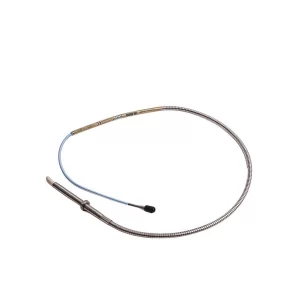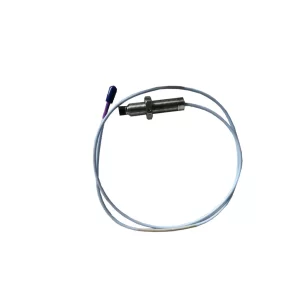
Baker Hughes closed at $54.66 on 28 October 2026, down 7.36% from $59.00 the session before — the first trading day after the third-quarter release and the morning of the earnings call. The quarter itself beat: adjusted EPS of $0.70 against a $0.61 consensus, revenue of $8.03 billion against $7.75 billion. What disappointed was the mix. Oilfield Services & Equipment (OFSE) was the only segment whose EBITDA fell year on year, down 2% at an 18.1% margin, while Industrial & Energy Technology (IET) booked $5.886 billion of orders, up 42%, and pushed remaining performance obligations to a record $39.4 billion. Bently Nevada sits inside IET’s Industrial Solutions line: the strongest segment in a quarter the market marked down.
By TenBN Editorial · Published 30 October 2026 · 9 min read

Quick answer: what changed on 28 October
- The share move: BKR fell 7.36% to $54.66 on 28 October, then 0.27% to $54.51 on 29 October — about 7.6% lower than the 27 October close of $59.00.
- The beat: adjusted EPS of $0.70 beat a $0.61 consensus; revenue of $8.025 billion beat $7.75 billion.
- The drag: OFSE orders were $4,047 million (−1% year on year), revenue $3,660 million (+1%), EBITDA $659 million (−2%) and margin 18.1% against 18.5% a year earlier.
- The engine: IET orders were $5,886 million (+42% year on year, −17% sequentially), revenue $3,477 million (+3%), EBITDA $685 million (+8%), margin 19.7% (+0.9 points) and RPO $39.4 billion, a record.
- The guidance: Baker Hughes raised both its full-year IET order guidance and its Horizon 2 IET order outlook to $50 billion plus.
- The sell side: five Buy ratings were published on 29 October with targets of $64 to $77, all above the closing price.
The quarter in six numbers
| Metric ($ millions unless stated) | Q3 2026 | Q2 2026 | Q3 2025 |
|---|---|---|---|
| Revenue | 8,025 | 6,742 | 7,010 |
| Adjusted EBITDA | 1,415 | 1,231 | 1,238 |
| Net income attributable to Baker Hughes | 411 | 681 | 609 |
| Diluted EPS, GAAP / adjusted | $0.41 / $0.70 | — | — |
| IET orders | 5,886 | 7,088 | 4,139 |
| IET RPO | 39,400 | 37,100 | — |
Read the table top to bottom and the contradiction appears. Revenue rose 14% year on year and 19% sequentially, but most of that came from consolidating Chart Industries from 16 July. Net income fell 33% year on year. The order book grew while reported profit shrank — which is exactly the combination that produces a lower share price on a day when the headline numbers beat.
Why a beat still sold off
The company did not comment on the share move in the release, and no single disclosure explains a 7.36% decline. Five mechanisms are visible in the numbers, and each points the same way: the beat was in orders, the disappointment was in current earnings and mix.
1. The revenue beat was mostly acquired, not organic
Group revenue of $8,025 million includes $888 million from Chart, a business Baker Hughes did not own in the third quarter of 2025. Strip that out and the two legacy segments grew revenue by roughly 1% to 3%: OFSE +1%, IET +3%. The 14% headline growth is real, but it is portfolio growth rather than underlying momentum, and investors routinely separate the two.
2. GAAP earnings fell, even as adjusted EPS beat
Net income attributable to Baker Hughes was $411 million, down 33% year on year and 40% sequentially. GAAP diluted EPS was $0.41 against adjusted EPS of $0.70 — a $284 million gap in adjusting items, including $157 million of other expense tied mainly to transaction costs on disposals and acquisitions. Depreciation and amortisation reached $505 million, with $143 million of it from Chart intangibles. A company can beat on adjusted EPS and still report materially lower net income; the market tends to price the second number when the first is flattered by add-backs.
3. OFSE lost margin in the regions that carry it
OFSE revenue was flat to slightly up, but the regional mix moved against it. North America revenue fell 3% to $955 million and Middle East/Asia fell 13% to $1,261 million; those two regions are 61% of the segment. Europe/CIS/Sub-Saharan Africa grew 29% and Latin America 12%, but from smaller bases. Segment EBITDA slipped 2% to $659 million and the margin fell 0.4 points to 18.1%. OFSE was the only segment with lower EBITDA than a year earlier — the cleanest explanation for why the market’s attention went there.
4. Chart dilutes group margin in its first quarter
Chart reported $888 million of revenue and $156 million of EBITDA, a 17.6% margin. That is below IET’s 19.7% and only slightly above OFSE’s 18.1%, so adding it lowers the blended margin: group adjusted EBITDA margin is 17.6%. Chart also booked $831 million of orders in a partial quarter, a book-to-bill below 1.0, which is normal for a short stub period but does not help the narrative.
5. Expectations were set by a record second quarter
IET orders of $5,886 million are up 42% year on year, but down 17% from the record $7,088 million booked in Q2. The release calls this the segment’s second-largest order quarter — accurate, and also a reminder that the sequential direction is down. The shares had risen 5.34% on 27 October before the release, so some of the order momentum was already in the price.
None of this changes the long-term order story. It explains why a quarter that beat on both lines could still close 7.36% lower: the beat was in future revenue, the miss was in present profit.
Three segments, three different quarters
| Segment | Orders | Revenue | EBITDA | EBITDA margin | Year-on-year |
|---|---|---|---|---|---|
| OFSE | $4,047M (−1%) | $3,660M (+1%) | $659M (−2%) | 18.1% (−0.4 pt) | Flat revenue, lower profit |
| IET | $5,886M (+42%) | $3,477M (+3%) | $685M (+8%) | 19.7% (+0.9 pt) | Order-led growth, margin up |
| Chart | $831M | $888M | $156M | 17.6% | First partial quarter |
The pattern is unambiguous. IET is the only segment that grew orders fast, grew EBITDA faster than revenue and expanded margin. OFSE held revenue but lost a little profit. Chart arrived with a lower margin than the group average. On a relative basis, the segment that contains Bently Nevada was the best performer of the three.
IET is the relative winner — and the guidance confirms it
IET’s order book does more than look large. Orders of $5,886 million against revenue of $3,477 million give a book-to-bill of 1.7, meaning the segment booked 70% more work than it billed. RPO of $39.4 billion is 11.3 times quarterly revenue, or nearly three years of current run-rate work. Within that, Gas Technology Equipment holds $16.5 billion and Gas Technology Services $16.8 billion, split almost evenly between new equipment and service.
That is why the guidance language matters more than the share price on any single day. The release says the order momentum “supports raising our full-year IET order guidance and Horizon 2 IET order outlook to $50 billion plus.” The raise is in orders, not in earnings guidance — an important distinction for anyone reading the headline. It tells you the company expects to keep winning work; it does not tell you when that work becomes revenue.
The one weak line inside the strongest segment
Bently Nevada hardware and Cordant software sit in IET’s Industrial Solutions product line, and that line had a poor quarter on paper: $244 million of orders, down 28%, and $205 million of revenue, down 29%. The release ties the revenue decline to the January 2026 sale of Precision Sensors & Instrumentation, and the orders line carries the same portfolio change.
Two things follow. First, the decline is a scope effect, not evidence of weaker demand for machinery protection; the business that left was sold, not lost. Second, the segment’s headline strength does not flow straight into Bently’s product line. IET’s growth this quarter came from climate technology solutions, gas technology equipment and gas technology services. Industrial Solutions is the smallest and softest of those lines — a reminder that “Bently’s segment is doing well” and “Bently’s product line is doing well” are different statements.
What actually reaches Bently Nevada
For a reliability or procurement team, the earnings call is background noise until it changes something on a machine. Three channels connect this quarter to Bently hardware.
The installed base grows before the spares do
The 74 gas turbine packages awarded in the quarter — 43 in the 1.1 GW integrated power award, 18 for AI infrastructure and 13 for the Cloud Connector pipeline — will be commissioned across roughly 2027 to 2029. Protection systems are specified at the package level: vibration monitors such as the 3500/42M, thermocouple inputs such as the 3500/61, keyphasor references such as the 3500/25 and power supplies such as the 3500/15. Smaller packaged equipment and balance-of-plant skids are more often specified with the 1900/65A or the 2300/20 module. The full architecture is described in the 3500 system guide.
Service backlog is the nearer-term signal
Gas Technology Services carries $16.8 billion of RPO. That is work on machines already running, and it is the part of the order book that generates probes, cables, relay modules and power supplies in the next few quarters rather than in 2029. If you are planning spares, the services backlog matters more than the equipment awards; the 3500 spares planning guide sets out the 2026 buying logic and the RoHS PCBA refresh position.
Remote monitoring turns backlog into data obligations
The SBM offshore award covers 27 LM2500 packages under a remote monitoring agreement with iCenter. Remote monitoring only works if the data path is specified early: transient data interfaces such as the 3500/22M TDI and the gateway layer carry the data out of the rack. The Arauco 109 FMU remote FAT case shows what that looks like in practice, and the Cordant hardware context explains where the software layer sits relative to the spares catalogue.
Three readers, three signals
| Reader | What this quarter says | What to do with it |
|---|---|---|
| Investor | IET orders and RPO are strong; OFSE margin is flat and Chart is dilutive at first | Watch IET order conversion into 2027 revenue and OFSE margin in Q4 |
| Reliability engineer | The new packages will be specified over the next two years | Get the monitoring scope agreed before the package specification freezes |
| Spares buyer | GTS backlog is $16.8 billion and the 3500 fleet remains supported | Plan consumables against service activity, not against order headlines |
Three things to watch next
- OFSE margin in Q4. A 0.4-point decline is not a crisis, but two consecutive quarters of margin pressure would confirm the market’s concern rather than a one-off mix effect.
- Chart’s first full quarter. The 17.6% margin and $831 million order intake cover a partial period; the first full quarter will show whether the dilution is structural or timing.
- IET order conversion. RPO of $39.4 billion only matters if it converts. Watch revenue growth in GTE and GTS over the next two quarters, not the order headline.
Frequently asked questions
Why did Baker Hughes stock fall 7.36% on 28 October 2026?
BKR closed at $54.66, down from $59.00, on the first trading day after the third-quarter release and the morning of the earnings call. The quarter beat consensus on adjusted EPS ($0.70 versus $0.61) and revenue ($8.025 billion versus $7.75 billion), but net income fell 33% year on year, OFSE EBITDA fell 2% with a lower margin, and the revenue beat depended heavily on the newly acquired Chart business. The release does not attribute the share move; the margin and earnings mix are the visible drivers.
Did Baker Hughes beat estimates in Q3 2026?
Yes, on both headline measures. Adjusted diluted EPS was $0.70 against a $0.61 consensus, and revenue was $8.025 billion against $7.75 billion. GAAP diluted EPS was $0.41 because $284 million of adjusting items were excluded from the adjusted figure.
Is IET really Baker Hughes’ strongest segment?
On this quarter’s numbers, yes. IET grew orders 42% year on year, grew EBITDA 8% against 3% revenue growth, expanded margin by 0.9 points to 19.7% and holds $39.4 billion of RPO. OFSE had flat revenue and lower EBITDA; Chart, in its first partial quarter, reported a 17.6% margin. IET also received the only guidance raise in the release.
Does Bently Nevada revenue rise directly with IET orders?
Not directly and not immediately. Bently hardware and Cordant software sit in IET’s Industrial Solutions line, which reported $244 million of orders and $205 million of revenue this quarter, both down about 28% to 29% after the Precision Sensors & Instrumentation disposal. New turbine packages create monitoring scope at commissioning, typically two to three years out, and spare-part demand follows first operation after that.
Do the analyst price targets mean the stock is undervalued?
No. Five Buy ratings published on 29 October carried targets from $64 to $77, between 17% and 41% above the $54.66 close. Price targets are twelve-month estimates from individual firms, not a valuation guarantee, and all five firms already rated the stock Buy before the quarter.
Related reading
- IET Q3 2026: 74 turbines mapped to monitoring demand
- Q3 2026 results: the full earnings read-through
- Q3 2026 preview: the questions before the release
- 3500 spares planning for 2026
- Cordant devices and the spares catalogue
Sources and method
Primary source: Baker Hughes Company, Baker Hughes Announces Third-Quarter 2026 Results, Exhibit 99.1 to Form 8-K filed with the U.S. Securities and Exchange Commission on 27 October 2026. Segment orders, revenue, EBITDA, margins and RPO are taken directly from that document; sequential and year-on-year percentages are as disclosed. Consensus figures and analyst ratings are from StockAnalysis as published on 29 October 2026. Closing prices are exchange data for 27 to 29 October 2026.
Editorial note: the article separates disclosed figures from interpretation. The release does not explain the share price reaction and does not mention Bently Nevada or Orbit 60 by name. The connection between IET orders and future Bently demand is an inference from the installed-base model, not a company forecast. Q2 2026 comparatives for net income, adjusted EBITDA and IET RPO are derived from the disclosed sequential changes.