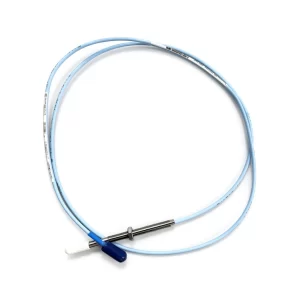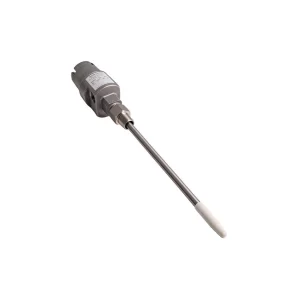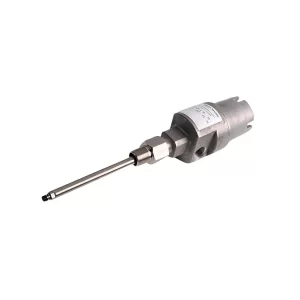
Bently Nevada is now selling Machine Health, an AI-driven predictive diagnostics service that continuously analyses large populations of condition-monitoring sensors, flags developing faults weeks before failure, diagnoses root causes and prescribes repairs. The offering is part of Baker Hughes’ Cordant software suite and is delivered with Augury, the machine-health specialist Baker Hughes invested in and allied with in 2021. It is aimed squarely at balance-of-plant equipment — pumps, fans, blowers, conveyors and other assets that are too numerous to monitor with route-based collection and too expensive to leave unmonitored. The strategic point is as important as the technology: Bently Nevada is packaging sensors, cloud analytics and expert review into a subscription, moving part of its business from selling hardware to selling asset-health outcomes.
Quick answer: what is Bently Nevada Machine Health?
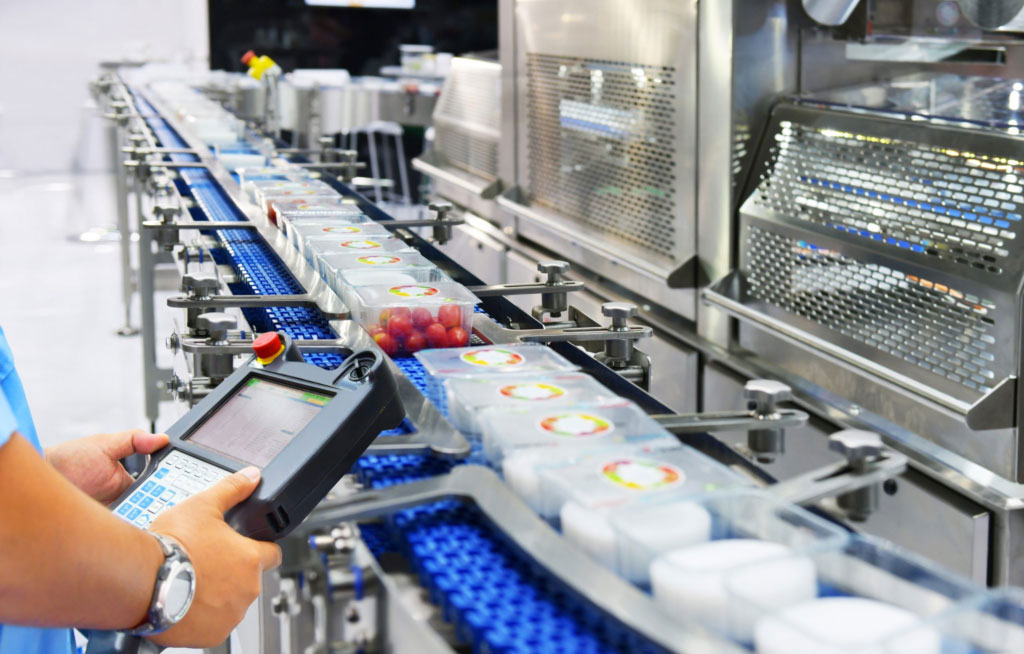
Machine Health is an AI-based condition-monitoring and diagnostic service. Sensors — including Bently Nevada’s sixth-generation Ranger Pro wireless devices and the Cordant gateway — stream vibration and process data to pre-trained, purpose-built models in the cloud. The models detect early signs of failure, diagnose the likely root cause and recommend a fix; human machinery experts review findings before they are issued as actionable notifications.
- What it does: predictive alerts, root-cause diagnostics and prescriptive repair guidance, not just threshold alarms.
- Who it targets: balance-of-plant asset populations — pumps, fans, blowers, small motors, conveyors — the “other 99%” that route-based programmes struggle to cover.
- How it is delivered: a subscription combining sensors, cloud software, AI models and expert support, rather than a perpetual software licence plus separate service contract.
- Who builds it: Baker Hughes/Bently Nevada with Augury; the alliance was announced on 26 October 2021 and formalised as a strategic agreement in January 2022.
- Published results: Baker Hughes cites an average 8.5× ROI per site, $2.03M average cumulative savings and 439 downtime hours avoided on average.
- Where it fits: alongside System 1, not instead of it — Machine Health covers the long tail; System 1 remains the plant-wide platform for critical machinery and 3500/Orbit 60 protection data.
What Bently Nevada actually launched
Bently Nevada introduced Machine Health through a series of webinars — “Machine Health powered by Artificial Intelligence”, “Why Machine Health is critical for your asset and reliability program”, “How to use Machine Health to drive your reliability program” and “When Industry 4.0 meets Machine Health”. The message across all four is consistent: the product analyses “millions of condition monitoring sensor outputs”, alerts teams “well in advance of failure”, diagnoses root causes and prescribes fixes.
The three problems it explicitly targets are worth quoting because they define the commercial case:
- Emergency downtime. Unplanned stops that force production losses and reactive maintenance.
- Overnighting spare parts. Expedited logistics costs that appear whenever a failure is discovered too late to plan a repair.
- Alarm fatigue. Reliability teams drowning in threshold alarms, most of which do not require action.
None of those are new problems. What is new is the delivery model: rather than asking a plant to buy software, configure rules and staff an analysis team, Bently Nevada sells a service in which the AI does first-pass diagnostics and human experts manage by exception. That is the “one-to-many” model described in Baker Hughes’ Machine Health eBook: because the AI reviews the data, a single specialist can support tens of thousands of machines.
Why balance-of-plant is the real target
Most condition-monitoring budgets still flow to the critical 1% — the turbine-generator trains, main compressors and reactor feed pumps that justify rack-based protection and dedicated analysts. The rest of the plant is a different problem. A typical refinery, paper mill or chemical site runs hundreds or thousands of pumps, fans and blowers, each individually inexpensive but collectively responsible for a large share of unplanned downtime.
Route-based collection was the traditional answer. A technician walks a route with a portable instrument, downloads the data and an analyst reviews it. That model is under pressure from three directions: the labour cost of walking routes, the scarcity of trained vibration analysts, and the fact that failures still occur between routes. Wireless IIoT sensors changed the data-collection economics, but they did not solve the analysis bottleneck — which is exactly where purpose-built AI is being applied.
The distinction matters when evaluating the service. Machine Health is not designed to replace a 3500 rack protecting a steam turbine, and Bently Nevada does not position it that way. It is designed to make the long tail visible at a cost per machine that route-based programmes cannot match.
How Machine Health works: monitor, diagnose, guide, act
Baker Hughes describes the service as four connected stages. Each stage has a specific output, and the handoff between them is where most monitoring programmes fail.
| Stage | What happens | Output the plant receives |
|---|---|---|
| Monitor | Compatible sensors transmit data continuously to pre-trained AI models; Ranger Pro and Cordant gateway provide the wireless layer | Continuous visibility of asset health without manual routes |
| Diagnose | Models trained on tens of thousands of machines analyse vibration trends for early failure signatures and root causes | A probable fault type and cause, not just a high reading |
| Guide | “Hybrid intelligence”: machine experts review findings and add context, prioritising maintenance work | A prioritised, human-reviewed recommendation |
| Act | Teams collaborate in the platform, execute the repair and feed results back | Planned maintenance instead of reactive firefighting |
The critical claim is speed of deployment. Bently Nevada argues that pre-trained, purpose-built models produce a short time-to-value, in contrast with general-purpose AI that “can take months to deploy and years to deliver value”. That is a fair distinction: a model trained on vibration signatures from tens of thousands of similar machines does not need to learn your pump from scratch, although it still needs clean data and correct asset context.
What “AI” means here — and what it does not
Three clarifications prevent inflated expectations.
It is vibration-led, not omniscient. Baker Hughes describes the diagnostics as using vibration trend data to detect early signs of failure and prescribe fixes. That covers the classic rotating-equipment failure modes — bearing degradation, misalignment, imbalance, looseness, seal and cavitation issues — very well. It does not replace thermography, oil analysis, ultrasonic leak detection or process-performance monitoring, and it is not a machinery-protection function. Trips and interlocks remain the job of protection systems.
It is supervised, not autonomous. The service is explicitly “hybrid intelligence”: human machinery experts review findings before recommendations reach the customer. That is a strength for safety and trust, but it also means response times depend on the service agreement, not only on the model.
It is trained on a population, not on your plant alone. Population-trained models generalize well across common machine types and failure modes. Unusual designs — non-standard vertical pumps, unusual gearboxes, machines with strong process-driven vibration — may need additional context or expert interpretation. Ask how the vendor handles low-confidence diagnoses.
The published economics
Baker Hughes publishes a set of outcome metrics for Machine Health. They are vendor-reported averages across its customer base, not guarantees, but they are specific enough to test against a business case.
| Metric | Published average | How to use it |
|---|---|---|
| ROI per site | 8.5× | Sanity check against your own downtime cost per hour |
| Cumulative savings | $2.03M | Compare with the multi-year subscription cost, not one year |
| Savings per machine per year | $21.5K | The most useful number for sizing coverage — multiply by your asset count |
| Downtime hours avoided | 439 | Apply your own contribution margin per hour |
| Saves per site | More than 42 | Indicates detection frequency, not just severity |
| Time until expanding coverage | 4.4 months | A proxy for time-to-value on the first asset group |
The arithmetic is straightforward. If a site’s unplanned downtime costs $10,000 per hour and the service avoids 400 hours, the gross benefit is roughly $4 million — comfortably above the six-figure subscription range typical of per-machine monitoring services. The risk in the business case is not the arithmetic; it is the assumption that your plant’s failure modes and data quality match the vendor’s reference population.
Customer evidence: two documented cases
Two published cases illustrate the mechanism better than the averages.
Invista. A rotating machinery capability manager reported a documented $4 million benefit from a single save. The decisive detail was timing: the service gave the site about 24 extra hours of warning, enough to change the response from emergency shutdown to planned intervention. That is the economics of Machine Health in one sentence — the value is not the diagnosis itself, it is the planning time it buys.
Solugen. Shortly after installation, the system helped avoid six hours of downtime and about $6,000 of repair cost on a single spherical pump. A small number by refinery standards, but it is the kind of asset that balance-of-plant coverage is meant for: individually minor, collectively significant, and previously monitored only on a route.
Both figures are vendor-published and should be treated as case evidence rather than expected performance. Their value is in showing the two benefit paths: avoided production loss on a critical asset, and avoided repair-plus-downtime on a small one.
From selling hardware to selling outcomes
The strategic significance of Machine Health is the commercial model. Traditional condition monitoring is a capital purchase: sensors, racks, software licences, installation, then an internal team to run it. Machine Health is a subscription: sensors and gateway included, cloud AI included, expert review included, priced per machine or per asset group.
That shift changes several things for a plant:
- Budget treatment. The cost moves from capital expenditure to operating expenditure, which is easier to approve at site level and easier to scale asset by asset.
- Staffing. The plant does not need to recruit vibration analysts to interpret every trend; it needs people who can act on prioritised recommendations.
- Risk transfer. Detection and diagnostic responsibility sits partly with the vendor, which is why service-level terms matter more than in a software purchase.
- Exit cost. Subscription models create dependency. Data ownership, export formats and what happens at contract end should be settled before signature, not after.
For Bently Nevada, the model also solves a coverage problem. Selling a 3500 rack to protect a $20,000 pump is uneconomic; selling a per-machine monitoring subscription is not. That is how a hardware-led business reaches the 99% of assets it could never justify a rack for.
Where Machine Health fits alongside System 1 and 3500
Machine Health does not replace System 1, and it does not replace protection systems. The three layers do different jobs:
- Protection (3500, Orbit 60): trips, interlocks and safety functions on critical machinery, with API 670 compliance where required.
- Plant-wide condition monitoring (System 1): consolidated data, long-term history, diagnostics, HMI and case management for critical and semi-critical assets. See our review of System 1’s 20-year evolution.
- Machine Health: AI-driven coverage of the balance-of-plant population, delivered as a service, with prescriptive outputs aimed at maintenance planning.
| Layer | Typical assets | Primary job | Delivery model |
|---|---|---|---|
| 3500 / Orbit 60 | Turbines, main compressors, critical trains | Protection, trips and interlocks | Capital purchase of hardware |
| System 1 | Critical and semi-critical machinery | Data consolidation, diagnostics, HMI, case management | Software licence, run by the plant |
| Machine Health | Pumps, fans, blowers, small motors | Early detection, root cause, prescribed fix | Subscription including sensors and experts |
In practice, many sites will run all three. A 3500 rack feeds protection and, through a 3500/92 communication gateway, streams data into System 1. Machine Health covers pumps and fans that were never on a rack. The integration question — whether Machine Health findings appear inside System 1 or in a separate portal — is worth asking early, because two disconnected alert streams recreate the alarm fatigue the service is meant to solve.
What to check before buying
A structured evaluation keeps the decision grounded in your failure history rather than the vendor’s averages.
- Start from failure data. Pull three years of maintenance records and rank balance-of-plant failures by cost. If bearing and alignment failures dominate, the service fits; if corrosion, erosion and operator error dominate, vibration-led AI will miss much of the loss.
- Map sensor coverage to failure modes. Confirm which measurements the proposed sensors capture and at what interval. Vibration on a pump does not detect a blocked strainer or a dry-running seal without process data.
- Ask about low-confidence diagnoses. Every AI system has them. What happens when the model cannot decide between bearing wear and cavitation? Who reviews it, and how fast?
- Define the service level. Detection is not the same as notification. Get response times, escalation paths and the named expert team in writing.
- Settle data ownership and integration. Confirm you can export raw and processed data, that it can feed your CMMS and, where relevant, System 1, and what happens to the models and history at contract end.
- Check the cyber and network path. Wireless sensors and cloud analytics cross network boundaries. Confirm the gateway architecture, data-diode or replication options and whether the design satisfies your site’s cybersecurity standard.
- Pilot on a representative asset group. Twenty to fifty machines across two or three duty types is enough to test detection quality and workflow fit before scaling.
Limits and risks worth stating
Three risks deserve equal billing with the benefits.
Model bias toward common failure modes. Population-trained models are strongest on the failures they see most: bearings, misalignment, imbalance, looseness. They are weaker on novel or process-driven faults. Sites with unusual equipment should expect more human interpretation.
Data quality, not model quality, decides outcomes. A sensor installed at the wrong location, mounted on a flexible panel or configured with the wrong sensitivity will produce confident nonsense. Installation discipline matters as much as the AI.
Subscription dependency. When diagnostics are delivered as a service, the plant’s internal diagnostic capability can atrophy. Keeping some analysts who can challenge a recommendation is a control, not a luxury — especially in the first year.
None of these argue against the model. They argue for buying it with clear eyes: a defined scope, a measured pilot and a contract that protects access to data and history.
Bottom line
Bently Nevada’s Machine Health service is a credible answer to a real gap. Rack-based protection and plant-wide platforms serve critical machinery well, but the hundreds or thousands of balance-of-plant assets remain under-monitored because route-based collection cannot scale and threshold alarms do not diagnose. Purpose-built AI, pre-trained on tens of thousands of machines and backed by human review, changes that economics — and the subscription model lets a site buy coverage a machine at a time.
For reliability teams, the decision is less about whether AI can diagnose a bearing fault (it can) and more about whether the service fits the site’s dominant failure modes, integrates with existing systems and is governed by a contract that keeps the data yours. Buy it as a measured service, pilot it on a representative asset group, and treat the published ROI figures as a hypothesis to test rather than a promise.
The commercial shape of that offer is now explicit in the vendor’s own navigation: hardware sits under Cordant™ Devices, the analytics under Cordant Applications, and the labour under Cordant Services. They renew on different cycles, which is the practical reason to ask for a split quotation.
Frequently asked questions
What is Bently Nevada Machine Health?
Machine Health is an AI-driven condition-monitoring service from Bently Nevada and Baker Hughes, delivered with Augury. It continuously analyses sensor data, detects early failure signs, diagnoses root causes and prescribes fixes, with human machinery experts reviewing findings before they are issued.
Is Machine Health the same as System 1?
No. System 1 is Bently Nevada’s plant-wide asset health software platform for critical and semi-critical machinery. Machine Health is a subscription service aimed at large balance-of-plant populations. Many sites use both, alongside 3500 or Orbit 60 protection systems.
Which assets is Machine Health designed for?
Primarily balance-of-plant equipment that is too numerous for route-based collection and too expensive to leave unmonitored: pumps, fans, blowers, conveyors, small motors and similar rotating assets.
What results does Baker Hughes publish for Machine Health?
Baker Hughes cites an average 8.5× ROI per site, $2.03M average cumulative savings, $21.5K average savings per machine per year, 439 downtime hours avoided and more than 42 saves per site on average. These are vendor-reported averages, not guarantees.
Does Machine Health replace vibration analysts?
It reduces the volume of routine analysis, because the AI performs first-pass diagnostics and experts manage by exception. Most sites still keep some internal diagnostic capability to validate recommendations and handle unusual machines.
Can Machine Health data be integrated with existing systems?
That depends on the deployment. Ask specifically whether findings can flow into System 1, your CMMS or a historian, whether raw data is exportable and what data ownership terms apply at contract end.
Sources and further reading
- Baker Hughes – Cordant Machine Health (powered by Augury)
- Bently Nevada – Machine Health webinars (AI-powered predictive, prescriptive diagnostics)
- Bently Nevada – “When Ranger Pro meets AI, good things happen”
- Baker Hughes – “Someone to watch over machines” (alliance background)
- Augury – Baker Hughes and Augury announce alliance (26 October 2021)
- Baker Hughes – Machine Health eBook (one-to-many delivery model)
Article last reviewed October 2026. Service scope, published ROI figures and customer results are quoted from Baker Hughes and Augury materials; confirm current commercial terms, coverage and integration options with Baker Hughes or an authorised partner before purchasing.
Running balance-of-plant assets alongside critical machinery? Browse the 3500 system guide, the 3500 Series catalog or 3300 XL probe systems for the sensing layer, and see how these platforms are applied in oil and gas compression, paper mills and data centre HVAC. More product news is published regularly; for part numbers and lead times, contact the TenBN team.